
If your pet trembles, hides, or refuses to get in the car when it’s vet day, you are not alone. Many pet owners tell us that taking their dog or cat to the clinic feels like a battle before it even begins. A fear-free vet visit is a complete approach to veterinary care that puts your pet’s emotional well-being at the center of every appointment. It is not just about being gentle. It is about removing the triggers that cause fear in the first place, from the waiting room to the exam table. In Florida’s warm, busy environment, pets are already exposed to a lot of stimulation. The last thing they need is a vet visit that adds more stress. This article explains what Fear Free veterinary care means, what it looks like in practice, and why it makes a real difference for anxious pets.
What Is a Fear Free Vet Visit?
A fear-free vet visit is a method of veterinary care designed to reduce or eliminate fear, anxiety, and stress in pets during medical appointments. The Fear Free movement was founded by veterinary behaviorist Dr. Marty Becker and has grown into a nationally recognized certification program for vet professionals across the country.
The goal is simple. Pets that are calm during exams are easier to examine accurately. They recover faster from procedures. And they are far more likely to receive the preventive care they need because their owners are willing to bring them back.
Research in animal behavior consistently shows that repeated negative experiences at the vet can lead to worsening anxiety over time. Pets that are already nervous become more reactive with each visit. Fear Free care breaks that cycle before it starts.
Signs Your Pet Is Stressed at the Vet
Recognizing stress in your pet is the first step to getting them the right kind of care. Some signs are obvious. Others are easy to miss.
- Panting or drooling excessively: In dogs, this often signals high anxiety rather than heat.
- Tucked tail or flattened ears: Classic fear postures that show your pet feels unsafe.
- Hiding or freezing: Cats especially shut down when overwhelmed.
- Aggression or snapping: This is fear, not bad behavior. A scared pet lashes out to protect itself.
- Trembling or refusing to walk: Many pet owners see this in the parking lot before they even reach the door.
Pets that show these signs during exams are also the ones whose owners report dreading vet visits. That dread is valid. But it does not have to be permanent. An anxious pet at vet appointments needs a different environment, not a tougher owner.
What Happens During a Fear Free Appointment
Fear Free visits look and feel different from a traditional appointment. Every step is intentional.
Here is what you can typically expect:
- Separate waiting areas for dogs and cats reduce exposure to unfamiliar animals and smells.
- Calming pheromone diffusers are placed in exam rooms to lower baseline anxiety before the exam begins.
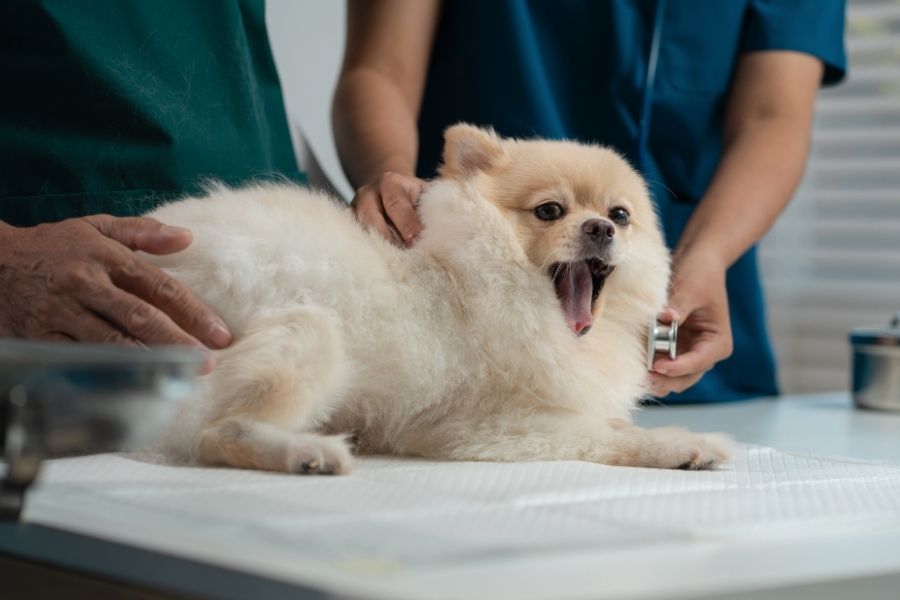
- Low-stress handling techniques replace physical restraint wherever possible. Pets are positioned for comfort, not convenience.
- High-value treats are used throughout the exam to build positive associations with the experience.
- Slower pacing means your vet takes time to let your pet sniff, settle, and signal when they are ready.
- Pre-visit medications may be recommended for pets with severe anxiety. Your vet will determine the right approach based on your pet’s history and needs.
At Tequesta Veterinary Clinic, our team in Tequesta tailors every appointment to the individual animal. No two pets respond the same way, and our approach reflects that. A stress-free pet exam is not a one-size-fits-all checklist. It is an ongoing conversation between you, your pet, and your vet.
Why Low-Stress Vet Care Matters for Your Pet’s Long-Term Health
This is where many pet owners are surprised. Fear Free care is not just about comfort on the day of the visit. It has a direct impact on your pet’s long-term health outcomes.
Pets that experience high stress during exams often have elevated cortisol and heart rate readings that can skew test results. A dog that is panicking during a blood pressure check will show artificially high numbers. That can lead to unnecessary treatment or missed diagnoses.
The American Veterinary Medical Association (AVMA) emphasizes that behavioral health is a core component of overall animal wellness. Low-stress vet care allows vets to conduct more thorough, accurate physical exams because the pet is actually cooperative.
In Florida, where pets often deal with year-round heat and environmental stressors, the cumulative effect of chronic anxiety can suppress the immune system over time. We frequently remind our clients that a calm vet experience is not a luxury. It is part of keeping your pet healthy.
Many dog owners ask us about nervous dog vet tips they can use before the appointment even starts. Simple strategies like skipping a meal so treats are more rewarding, bringing a favorite toy, and doing short practice car rides can make a meaningful difference. Your vet can walk you through specific preparation steps based on your dog’s triggers.
How to Find the Right Fear-Free Vet for Your Pet
Not every clinic offers Fear Free certified care. Knowing what to look for can save you and your pet a lot of unnecessary stress.
Ask these questions when evaluating a new vet:
- Are your team members Fear Free certified?
- Do you offer separate waiting areas for dogs and cats?
- What low-stress handling techniques do you use during exams?
- Do you offer pre-visit anxiety medications for highly stressed pets?
- How do you handle a pet that becomes reactive mid-exam?
A good Fear Free practice will answer these questions confidently and without hesitation. They will also ask you questions about your pet’s history, triggers, and past vet experiences before the appointment begins.
Pet owners often tell us that once they find a vet who practices Fear Free principles, they notice a shift within just one or two visits. An anxious pet at vet appointments can learn, over time, that the clinic is a safe place. That is not an accident. It is the result of intentional, consistent, compassionate care.
Conclusion
Your pet’s emotional health matters just as much as their physical health. A fear-free vet visit is not a trend. It is a clinically supported approach that leads to better exams, more accurate diagnoses, and pets that are genuinely less stressed over time. If your dog or cat has always struggled at the vet, the answer is not to go less often. It is to find a practice that meets your pet where they are. Tequesta Veterinary Clinic is proud to offer compassionate, low-stress care to pets and families in Tequesta and the surrounding communities. Your pet deserves to feel safe. We are here to make that happen. Book an appointment today.
Frequently Asked Questions
What does a Fear Free vet visit actually involve?
Ans: A Fear Free vet visit uses specific techniques to reduce fear, anxiety, and stress during a veterinary appointment. This includes calming pheromones in exam rooms, gentle low-restraint handling, high-value treats, and pacing the exam around your pet’s comfort level rather than rushing through it.
Is Fear Free certification the same as being a gentle or kind vet?
Ans: Not exactly. Fear Free is a formal training and certification program developed by veterinary behavior experts. It goes beyond general kindness by teaching specific protocols for reading animal body language, adjusting handling techniques, and modifying the clinic environment to reduce stress triggers.
How should I prepare my nervous dog for a vet visit?
Ans: Some of the most helpful nervous dog vet tips include skipping a meal before the appointment so your dog is more motivated by treats, bringing a favorite toy or blanket with familiar smells, and doing short practice car rides to reduce travel anxiety. Talk to your vet about whether pre-visit calming medications might also be appropriate.
Can cats benefit from Fear Free care, too?
Ans: Absolutely. Cats are often more sensitive to environmental stressors than dogs and can shut down entirely during a traditional exam. Fear Free clinics typically offer separate cat waiting areas, quieter rooms, and feline-specific handling techniques that make a significant difference for anxious cats.
How many visits does it take before an anxious pet starts to relax at the vet?
Ans: This varies by pet and how severe the existing anxiety is. Some pets show noticeable improvement within two or three visits using Fear Free techniques. Others with deep-rooted fear may need several months of consistent low-stress experiences. Your vet will set realistic expectations and adjust the approach based on your pet’s progress.