

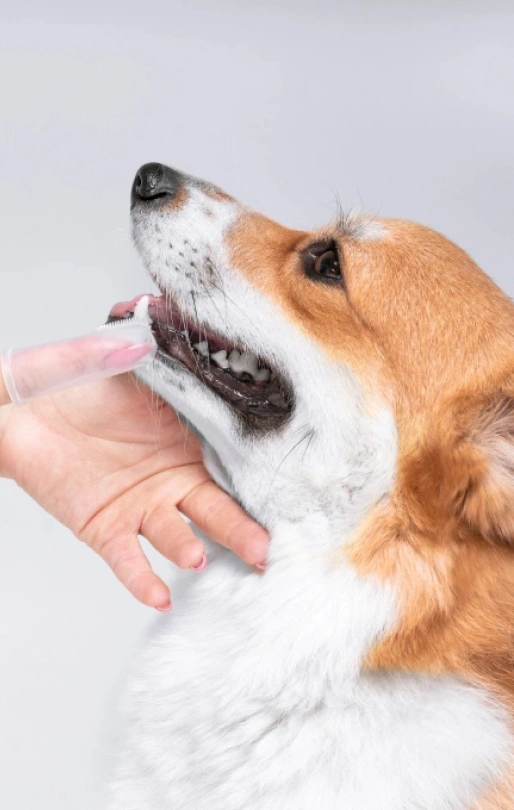

Keep Your Pet’s Smile Healthy and Bright!
All dental packages receive pre-medication, an iv catheter, iv fluids, general anesthesia, anesthetic monitoring, nerve blocks, dental cleaning and polishing of the teeth, the bair hugger and full mouth dental X-rays as part of the dental package.
We monitor blood pressure, end-tidal carbon dioxide output, ECG, pulse oximetry, temperature, heart rate, and respiratory rate throughout the procedure. When we anesthetize a pet we utilize all the safety nets in our arsenal. We expect pre-anesthetic blood work within a few months of anesthesia and offer pre-anesthetic global FAST exams the morning of the procedure to help minimize any anesthetic risk. We incorporate dental nerve blocks to keep the pet on the lightest plane of anesthesia possible for the pet’s safety. Clients are often surprised at what a light plane of anesthesia we keep our patients for dentals.
Dental Xrays Are Free With Dentals!
One of our doctors took an impromptu video of the vet nurses to post on YouTube for clients to see what really happens in the back. Our nurses are good eggs to tolerate her going Hollywood on them! She surprised them with this idea moments before this video, and they performed admirably while being filmed. They are seasoned pros, and it would have likely been even faster if they hadn’t been on camera.
Anesthesia and dental X-rays at the onset of a pet dental
Will My Pet Need Extractions?
(These photos are of the same tooth)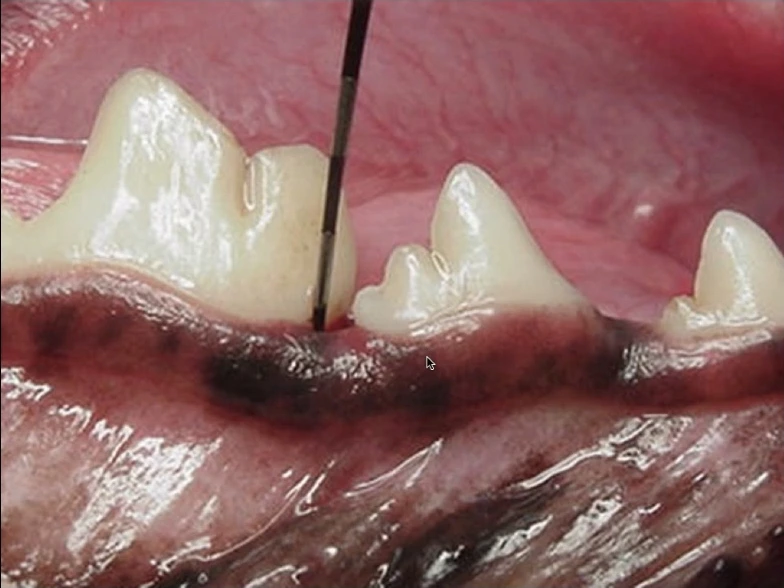
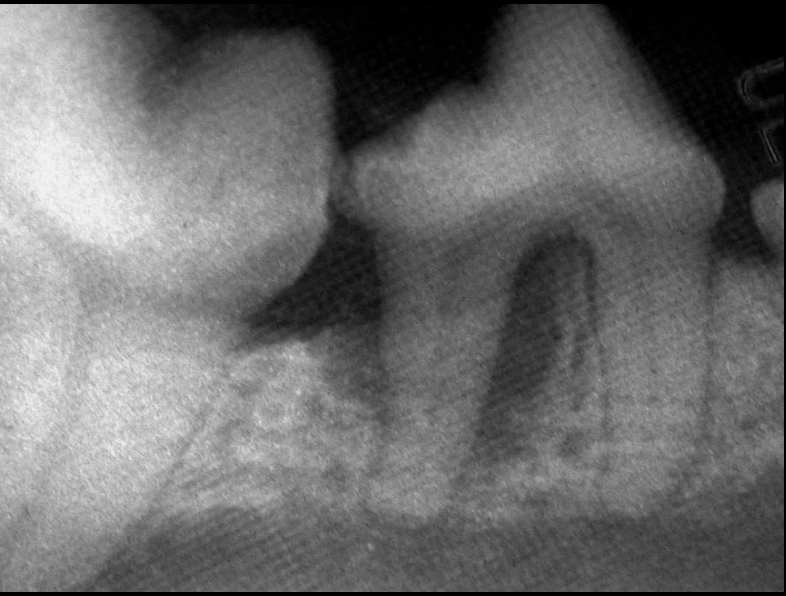
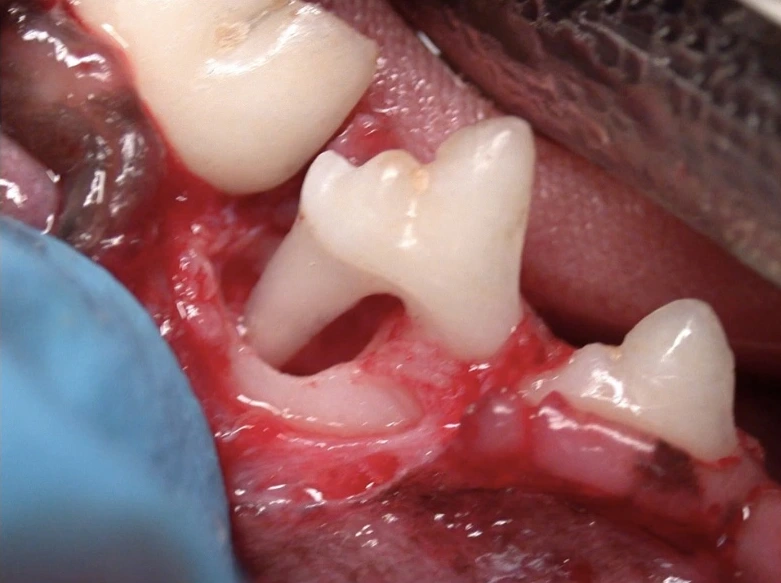
These pictures are all the same tooth!
The first picture shows why “non-anesthetic dentals” can give people a false sense of security. This picture shows a periodontal pocket, but you don’t see the abscessed tooth root that is causing the pet significant pain. The picture looks benign when there is actually significant pathology.
The 2nd picture shows the dental xray. The tooth is clearly abscessed. We can’t take dental xrays unless the pet is anesthetized because the digital dental sensor (the part of the machine that goes in the pet’s mouth) has a 9 thousand dollar replacement cost! We don’t stick it into a mouth unless the pet is anesthetized.
Finally, the 3rd picture shows the actual tooth. The infected (painful) tissue has been cleaned away from the tooth. Remember how benign it appeared on the first picture. This tooth needs extraction. Without xrays the pet would have suffered silently in pain.
We take full mouth dental xrays with our dental cleanings. This takes about 6 to 10 minutes for small pets and 10 to 12 minutes for large pets. You can view a video of Nurse Jane and Nurse Heather taking dental xrays while the doctor describes the procedure and anesthetic safety nets we utilize. We utilize dental nerve blocks (local anesthesia) to prevent pain and to help us keep the patient on the lightest plane of anesthesia possible. We do not charge for dental xrays.
See below (under “Dental Extractions”) for more information on dentals and our safe anesthetic practices. Sometimes clients think the pet is just “getting old” when in fact there is oral pain. “He’s like a puppy again!” is something we often hear after dentals.
About Our Dental Cleanings
What Cleaning Includes
- All dental packages receive pre-medication, an iv catheter, iv fluids, general anesthesia, anesthetic monitoring, dental cleaning and polishing of the teeth, the bair hugger, and full mouth dental x-rays as part of the dental package.
- We monitor blood pressure, end-tidal carbon dioxide output, ecg, pulse oximetry, temperature, heart rate, and respiratory rate throughout the procedure.
- When we anesthetize a pet we utilize all the safety nets in our arsenal. We expect
- pre-anesthetic blood work within a few months of anesthesia and offer pre-anesthetic global fast exams the morning of the procedure to help minimize any anesthetic risk.
- We incorporate dental nerve blocks to keep the pet on the lowest plane of anesthesia possible for the pet’s safety.
- All pets under anesthesia will get the anti-nausea medications, Cerenia and Ondansetron. All pets get an IV catheter and fluids as part of the package.
More About Our Dental Procedures
We perform a lot of dentals at Tequesta Vet Clinic and pride ourselves on our dental care.
At the onset of anesthesia, the nursing staff obtains full mouth digital X-Rays of the pet’s mouth rapidly at the beginning of anesthesia. This typically takes about 10 minutes for small dogs and cats and about 10 to 15 minutes for big dogs. We utilize top-end dental and anesthesia equipment and highly skilled nurses who not only perform the dentals but also monitor the anesthesia. When your pet is under anesthesia for a dental it is like a NASCAR pit crew working on your pet. Please also read about anesthesia and safety nets under a separate tab on our website. A dental is not just a dental. It is anesthesia as well, and we do our best to ensure the safety of your beloved pet!
If your pet has heart disease we will discuss special protocols and have one of the local cardiologists do an echo prior to scheduling a dental.

Dental Extractions
If the dental requires extractions, clearly there is added anesthesia time, sterile surgical instruments, suture, doctor time, nursing time, and nerve blocks. We don’t charge “per tooth” extraction time as sometimes teeth just fall out whereas other times it may be quite tricky. We charge by the minute of surgery time. This pays for both the doctor and the nurses attending to your pet. Dentals costs vary because there might be no extractions or there might be multiple extractions. We just don’t know until we have the pet anesthetized, have the dental xrays and have cleaned off the tartar to evaluate the teeth. Dog’s have 42 teeth. That’s little 42 patients in your dog’s mouth! Cats have 32 teeth.
Anesthesia
We rarely keep pets under anesthesia longer than 120 minutes. We know that many veterinarians who will leave a pet under anesthesia for a dental for 3 or 4 hours at a time, but we disagree with this mentality. If a pet is doing well under anesthesia we may extend the dental beyond our usual 120 minutes cut-off, but we take into account how the pet is doing including vital signs, blood pressure, end-tidal CO2, and temperature. IF there is more pathology than we can do under one anesthetic procedure, we may wake the pet up and reschedule a 2nd dental procedure.
Our Anesthesia Safety Nets and Best Practices
Keep reading to learn the many “safety nets” we have in place to minimize the risk of anesthesia. We do not allow clients to decline any of these safety nets. These are non-negotiable! These safety nets are included in the price of anesthesia. These safety nets are the things we do when we anesthetize our own pets.
